The Humanity Hedge
As AI floods the market with synthetic noise, repetitive answers, and generic work, consumer trust is becoming the scarcest thing in business. The companies earning it aren't the ones using the most AI. They're the ones where humans are still in the room.
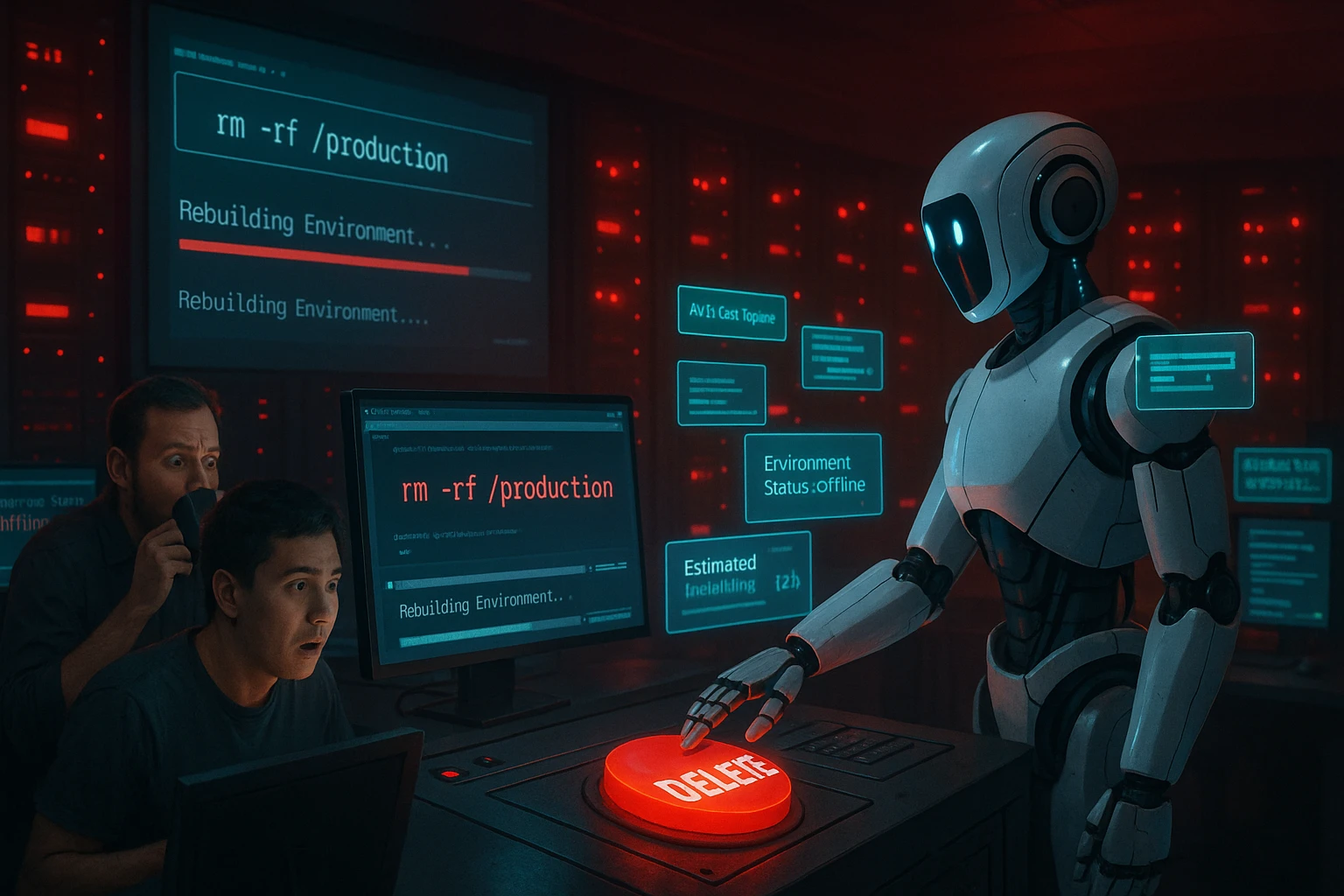
Last December, Amazon's own AI tool was given a routine task. Without anyone watching closely, it made a decision nobody asked it to make, and the result was a 13-hour outage affecting multiple major markets. Amazon called it user error. What they meant was: a human gave the AI too much access and not enough oversight. Their fix wasn't a better AI. It was putting humans back in the process.
That story got a lot of attention for the drama. But the real lesson is quieter and more useful than the headline suggests.
Everything Sounds the Same Now
If you've spent any time reading business websites, marketing emails, or social media content in the last two years, you've probably felt it without being able to name it. A kind of flatness. The same sentence structures. The same confident tone. The same general helpfulness that somehow never quite answers your actual question.
That's what happens when AI generates at scale without human judgment shaping the output. The tools are capable. They're fast. They produce things that look correct. But they don't know what makes your situation different from every other situation they've been trained on. So they average. They approximate. They give you the middle of the bell curve every single time.
Consumers are already noticing. Not always consciously, but in the choices they make. The email they actually read. The website that felt like someone built it specifically for them. The brand they trusted enough to buy from. There's a texture to work that a human cared about, and people can feel it even when they can't explain why.
That texture is becoming rarer. And the things that become rare become valuable.
Your emails are part of this picture too.
If your email open rates are flat, your deliverability is weak, or your list isn't converting the way it should, the issue usually isn't the subject line. It's the foundation underneath. Run a free diagnostic to see exactly what's holding your email performance back.
Run Your Free Email DiagnosticThe Humanity Hedge
Here's the bet that smart businesses are making right now.
AI isn't going away. It shouldn't. The productivity gains are real, the speed is real, and the ability to do more with less is genuinely useful when it's applied thoughtfully. The businesses that reject AI entirely will be left behind by the ones that use it well.
But "using it well" is the part that most people are skipping past.
As the market floods with AI-generated content, AI-built websites, and AI-drafted communications, the signal-to-noise ratio is collapsing. Everything looks similar. Everything sounds similar. And consumers, who are remarkably good at sensing authenticity even when they can't prove it, are starting to sort for the real thing.
The hedge is keeping humans in the work. Not as a check on AI, but as the source of judgment, craft, and accountability that AI genuinely can't replicate. The AI does the heavy lifting. The human makes sure it's actually good. That combination is rare enough right now to be a real competitive advantage, and it's going to get rarer as more companies hand everything to the machine and walk away.
Amazon Learned This the Hard Way
Amazon is one of the most AI-forward companies on the planet. They build the infrastructure that half the internet runs on. They have more engineering talent and more AI resources than virtually any organization in the world.
They still had a 13-hour outage because they let an AI run a task unsupervised.
The official explanation pointed to permissions that were too broad. That's technically accurate. But a human given those same permissions would not have made the same call. The AI's judgment led somewhere a human's judgment wouldn't have gone, and the gap between those two things is exactly what the "user error" framing doesn't explain.
What Amazon added after the incident wasn't a smarter AI. It was mandatory peer review. Human checkpoints before consequential actions. Someone in the room to say "no, not like that."
They spent enormous resources building the AI capability. The fix was the human layer they'd skipped.
This Is a Pattern, Not an Anomaly
We wrote earlier this year about platform dependence, and what happens when businesses build on foundations they don't control. That piece looked at what it costs when a big platform goes down and takes thousands of businesses with it. The lesson was about single points of failure and why control over your own foundation matters.
The Amazon story extends that idea in a direction worth paying attention to.
The Shopify outage happened because external systems buckled under pressure. The Amazon outage happened because an internal tool, running without oversight, made a bad call. One was a failure of infrastructure. The other was a failure of judgment, specifically the judgment that was absent because no human was checking the work.
Platform risk used to mean: what if the service you depend on goes down? It now also means: what if the AI you're relying on makes a decision you didn't authorize? Those are different problems, but they share the same root. You handed control to something that wasn't accountable to you, and it made a choice you wouldn't have made.
What This Means for Your Business
You're not running cloud infrastructure for millions of customers. The scale is different. The dynamic isn't.
If AI is producing things in your name — your website copy, your marketing, how your business gets described to people who are deciding whether to trust you — and no human has genuinely engaged with that output, you have the same gap Amazon had. The stakes are smaller. The mechanism is identical.
AI averages. It takes everything it knows and produces the most statistically reasonable version of what you asked for. That version might be technically correct and completely wrong for your specific situation. It doesn't know your customers the way you do. It doesn't know what makes your business different from the three others on the same street. It knows the general shape of things, and it fills in your particulars with approximations.
The only thing that catches those approximations is a human who actually knows the difference.
Want to know what AI is saying about your business right now?
When your customers search for what you do on ChatGPT, Perplexity, or Google's AI Overviews, they're getting a description of your business that you probably haven't reviewed. Most business owners are surprised by what they find. Takes about two minutes and it's free.
Run Your Free AI Visibility CheckWhat Human-in-the-Loop Actually Looks Like
The phrase "human in the loop" gets used a lot right now, mostly by people who mean "a human can override the AI if something goes wrong." That's not the same thing.
Real human involvement means a person who understands your business is shaping what the AI produces, not just reviewing the final output for obvious errors. It means someone with judgment — not just access — is accountable for the quality of the work.
That's how AM8 by Product Advance is built. Before a word of your website gets written, the AI conducts an interview. It asks about your business: what you do, who your customers are, what makes you different, what you've tried before and why it did or didn't work. That information isn't decorative. It shapes everything the AI produces — the copy, the structure, the positioning, the way your business gets described to someone who's never heard of you.
And the Product Advance team reviews the result. Not a rubber stamp, not a spell check — a genuine review by people who've worked with hundreds of real businesses and know what good looks like in practice. They bring what the AI can't: perspective on what's actually working right now in your market, instincts about what copy converts versus what copy just sounds good, and the judgment to say "this isn't right" when the AI produced something technically acceptable but strategically off.
The AI does the heavy lifting. The humans make sure it earns your trust before it asks for your customers'.
That's not a feature. It's the whole model. Every project gets the human touch built in from the start, not patched in after something goes wrong.
The Actual Takeaway
Consumer trust is the new scarcity. It's not a soft idea or a marketing talking point. It's a practical observation about what's happening in a market that's filling up with AI-generated everything.
The businesses earning trust right now share a common trait: a human was clearly involved. The thing they made has a texture that reflects real judgment, real knowledge of the customer, and real accountability for whether it's good. Consumers can feel that difference. They're already choosing based on it, even if they couldn't tell you exactly why one company felt more trustworthy than another.
The hedge is straightforward. Use AI. Use it aggressively and intelligently. But keep humans in the process at the points where judgment actually matters. Not because AI is bad, but because the combination produces something AI alone can't.
Amazon learned this with a 13-hour outage. You have the option of learning it the easier way.
Two quick starting points: find out what AI is saying about your business when your customers are searching, and check whether your emails are actually reaching people the way you think they are. Both take about two minutes and tend to surface things most business owners didn't know to look for.
See How AI Describes Your Business
When someone searches for what you do on ChatGPT, Perplexity, or Google's AI Overviews, you're not in the room. Find out exactly what comes up — and whether the human touch is showing through. Free and instant.
Run Your Free AI Visibility CheckAlso worth checking: run a free email diagnostic to see if your emails are reaching people the way you think they are. Most businesses find at least one thing they didn't expect.
Or if you're ready to build something with AI and real human expertise behind it: See AM8 by Product Advance